Michigan Farm News: MFB member attends State of the Union, advocates for farm bill, trade issues
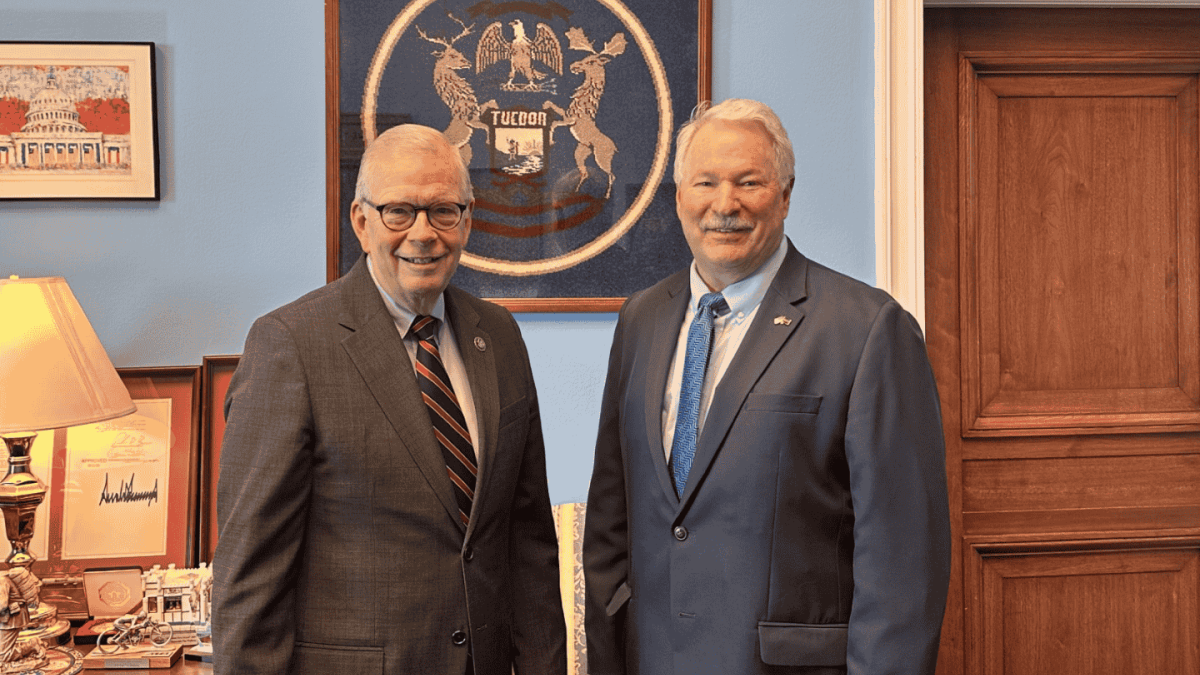
More farm bill discussions will happen this week. Then again, Doug Darling’s heard that before. For years, actually.
Yet when politicians knock on your door, asking for help, you help. You might even attend the nation’s State of the Union address — like Darling did with congressman Tim Walberg (MI-05) on Feb. 24 — to discuss the farm bill, tariffs, agricultural trade and E15.
“There are so many things that farmers need to be aware of how Congress impacts our daily lives,” said Darling, a Monroe County Farm Bureau member and former at-large director for Michigan Farm Bureau. “Legislators in Washington and Lansing have an impact on farmers’ bottom lines every day, whether we knew it or not.”
Namely, Darling discussed with politicians new trade agreements — 19 have been completed or are pending since April of 2025 — and the upcoming review of the United States-Mexico-Canada Agreement, which is required to happen every six years.
Global trade is essential for Michigan farmers, added Darling, which is why the U.S. has used tariffs as a negotiating tool to shrink its trade deficit with other countries. This month, USDA predicted the nation’s trade deficit to fall to $29 billion, down $8 billion from December’s projections and almost $15 billion from the previous year.
Prior to the State of the Union address, Darling also visited with Congressman Glenn “GT” Thompson, ranking member of the House Committee of Agriculture, and “he assured me the Farm bill would be voted on this week.”
In February, Thompson introduced the Farm, Food, and National Security Act of 2026, an 802-page bill that’s “an important step forward in providing certainty to our farmers,” said Thompson, and updates key policy components of farm bill programs that haven’t been updated since the 2018 Farm Bill.
“I also watched Congressman Walberg from the gallery, and you saw him over on one side, and then you saw him in another spot,” said Darling, noting it was like watching a honeybee pollinate a flower, as Walberg and other DC politicians bounced from one person to the next to talk policy.
“I think (Walberg) spoke to like five or six different congressmen … and he was visiting with people from both parties who were part of his committee. That’s what our members need to know: That they are listening and trying to answer our questions.”
According to MFB President Ben LaCross, farmers like Darling bring real-word experience about what trade policy means to Michigan agriculture.
“When our farmers speak up, they’re asking for fair access to markets — both domestic and abroad — so they can compete and win,” LaCross added.
“For a state like Michigan, where agriculture is incredibly diverse, strong farmer advocacy helps ensure that agricultural trade benefits our farms and farmers now and into the future.”