The Daily Clarion: Emphasis on high-tech coal job training, opportunities voiced at VU field hearing
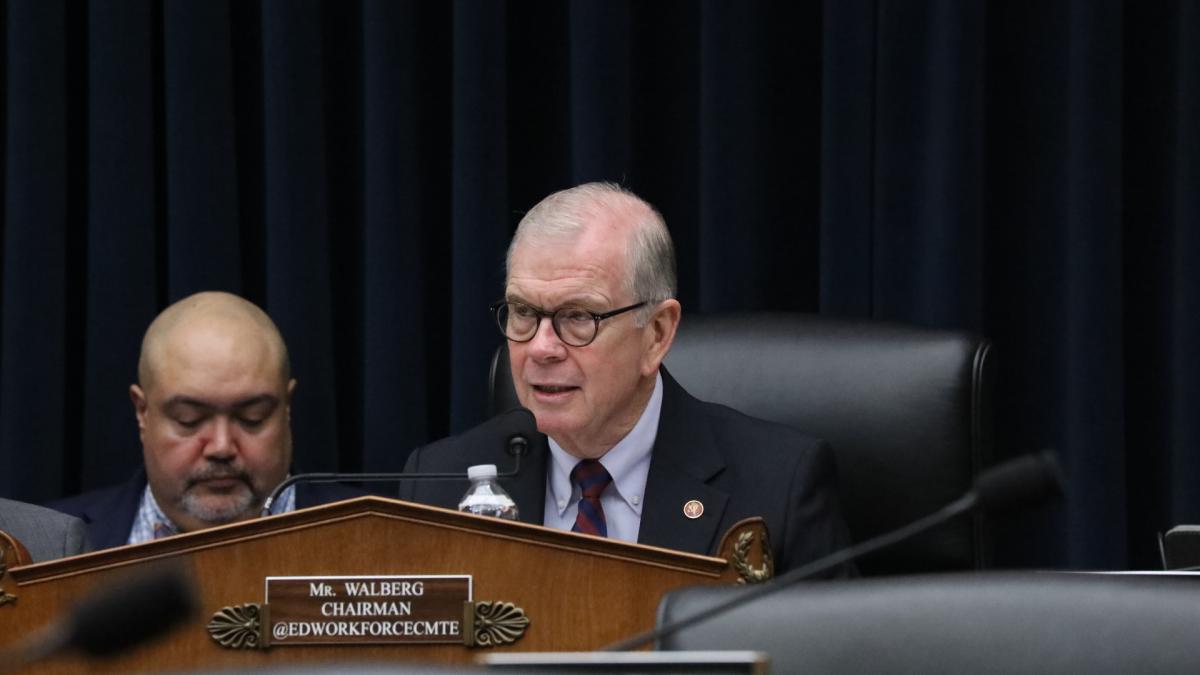
Gibson County's long history with coal is no secret locally, but testimony in a U.S. House Committee on Education and Workforce field hearing at Vincennes University Fort Branch Friday emphasized the need to promote the opportunities for high-paying jobs and the need for high-tech training in the mining industry.
Gone are the days of pick-axe extraction from coal seams. Bruce Stevens, president of Resource Services LLC of Jasonville and Peabody Energy Francisco Mine Manager Eric Carter presented testimony at the field hearing calling for more focus on the opportunity training for high-tech jobs available in coal mining, just as career paths have been established for advanced manufacturing.
Committee Chairman U.S. Rep. Tim Walberg, Michigan, and committee member U.S. Rep. Mark Messmer, Jasper, hosted the hearing in Gibson County after a tour of the Francisco mine operations.
Walberg said the Mine Safety Health Administration has seen a surge in mining productivity following presidential executive orders designed to boost domestic coal production for more energy independence.
Walberg said the U.S. Department of Labor and the House committee are looking at regulatory policies to allow mining to grow, making note of nearly $100 million in federal funding from the Department of Energy, including $80 million for development and commercialization of advanced mining technology, some of which was viewed at the Francisco mine.
The Mine Safety Health Administration has also created a compliance assistance cash program to support the anticipated surge in production and continues to award millions in grants to support mine safety and health training, he said.
Walberg reported the grants and assistance are producing results, noting that last year the mining industry reported its lowest total injury rate in history. But he said there's still more work to do, and the hearings are a springboard for more collaboration between government and the private sector.
Messmer introduced Stevens, a former president of the Indiana Coal Council and former director of the reclamation division for Indiana Department of Natural Resources, and Carter, the Francisco mine manager with 20 years experience in the coal industry.
Also testifying at the hearing were attorneys Sam Petsonk of Oak Hill, West Virginia, who has represented coal miners and Arthur Wolfson of Pittsburg, Pennsylvania, who has represented coal operators.
Stevens made note of the VU Fort Branch training/retraining facilities, which provides education for nearly 3,000 coal miners each year. The campus features classroom equipment, plus Indiana’s only mock underground mine used for for safety and rescue training.
“Indiana’s coal miners are highly skilled men and women,” he said, working with specialized and mechanized equipment that requires training.
Stevens said the average coal mining salary of $90,000 includes strong benefits. He noted that in 1988, 39 companies operated 72 mines in Indiana. Last year, six companies operated nine mines.
He said many in the industry reduced production, driven by regulations forcing closures. He said many miners lost good-paying jobs. Now, he said, the need for coal is urgent with data centers that and manufacturing "that strain energy supply chains."
Carter said he believes schools cater primarily to employers outside the mining industry, but the mining industry has opportunities from labor to managerial positions. He said he has witnessed a culture shift among students with no clear pathway to trades including mining — which causes more training requirements and longer training at mining operations.
Carter said perception is a problem. "A career in mining is among skilled professionals, and the earning potential is highest among those careers without a four-year degree.
Petsonk told the committee the government needs to support a crystaline silica rule for the safety of miners. He said miners face the most extreme exposure to silica dust, and it has been "well over 50 years since the CDC recommended an exposure limit that we still haven’t put into place."
He said he respect concerns about the industry and small operators, "but the agency that is supposed to protect America’s miners has not defended them for this rule," and asked the committee to send a message to MSHA to fully restore the silica dust rule.
"The government’s message has been 'run more coal,'" he said. But coal basins are substantially depleted, and the industry is "in that getting what’s left over…cutting through unstable high walls…more respirable dust risks...it’s not the time to be cutting mine safety."
He added that DOGE cuts resulted in only three administrative law judges nationwide to hear cases, urging the committee to support safety enforcement.
Wolfson said his mining clients face a strict MSHA regulatory framework that requires mandatory inspections and penalties for violations. “The Mine Act should include a pattern of compliance instead of pattern of violation," he said, suggesting "there should be a performance-based incentive for the best of the good actors...”
"Indiana is one of the most important coal producing states," said Messmer. "Regulatory burdens and workforce shortage are barriers to the industry," he noted, but added that VU is training to equip miners to meet part of the challenge. "Safety training is an important component of lasting training."
Stevens said the impact on the coal industry is not just on the operators and miners, but also on those providing goods and services. "For every coal mining job, there are 3 or more supporting jobs," he said.
Stevens said coal miners are highly trained and command a good salary, averaging over $90,000 a year. " Many make more than that and have strong benefits," he said. When coal mining jobs are lost in rural areas of the state, miners either have to relocate or fine a lower paying job.
Messmer asked about how min operators recruit talent.
Carter said it requires a lot of training to ready low-skill workers coming to mining jobs, but workers with advanced training in other fields can adapt to the mine industry with support for training.
"What can we do to remove the stigma?" asked Messmer.
Carter said he believes the perceptions of coal mining job are "rooted in outdated images," but there are a range of widely skilled roles in mining that offer stable, well-paying careers. "If students, workers and communities understand the skills, it helps reduce misconceptions and informs awareness and respect for energy," he said.
Carter said coordinated policy support and industry-led training and partnerships with community colleges and technical schools and incumbent worker training can help when. Policy and workforce development is a strategic tool, he said.
Stevens said the VU Fort Branch campus "is a real testament to the partnership the federal government can have with learning institutions, calling for training grants and stability with multi-year funding for programs to hire and retain competent instructors, and also opportunities for apprenticeships in mining.
"I don’t think they are steering students away from a career in coal, but I don’t think they are really directing them toward it, either," he said. "There's a need to understand that the opportunity is there for them to find jobs in the coal mining industry.
"This is an industry that demands innovative programs," he said. "How are schools evolving to meet these demands? Unfortunately, many people have a bad perception of coal mining. Some still view it as miners with picks and shovels going underground every day and loading coal in that manner. Miners work hard…but the operations today are highly technical, safety driven…they rely on advanced equipment…it’s modern and stable."
He said a high school student with a background in welding can continue learning their skill at a mine or in VU. "There is a need for an emphasis in schools that there is still a career path in mining."
"There are a variety of high skilled jobs in the industry, and the broad perspective is that many schools may not know about these opportunities," said Carter.
"Currently the biggest opportunity for high skilled (mining) jobs is in the engineering fields," he said. "Those roles in the industry are growing rapidly and are really needed to progress mines with the new technology that comes along. It requires a very high skill set... it takes a highly skilled, highly trained person to work on these pieces of specialized equipment. As far as better promoting opportunities, we need stronger partnerships between education and workforce," he said, and increased exposure through outreach.
Walberg said the field hearing Friday is a way to gain input on "crucial issues we really want to address...it’s crucial that mining not simply be sustained, but given a future that advances," he said. "We intend to keep looking into this issue. It is our purpose to build on economy and makes sure the mining industry has an economy that grows as well…We want the industry to survive and thrive. We also know, bottom line, it touches families. It touches the economy…the personal economy of families that expect that paycheck to carry on their needs. All of that is within the purpose of this committee."