Campus Reform: Bill defining sex under Title IX heads to House floor
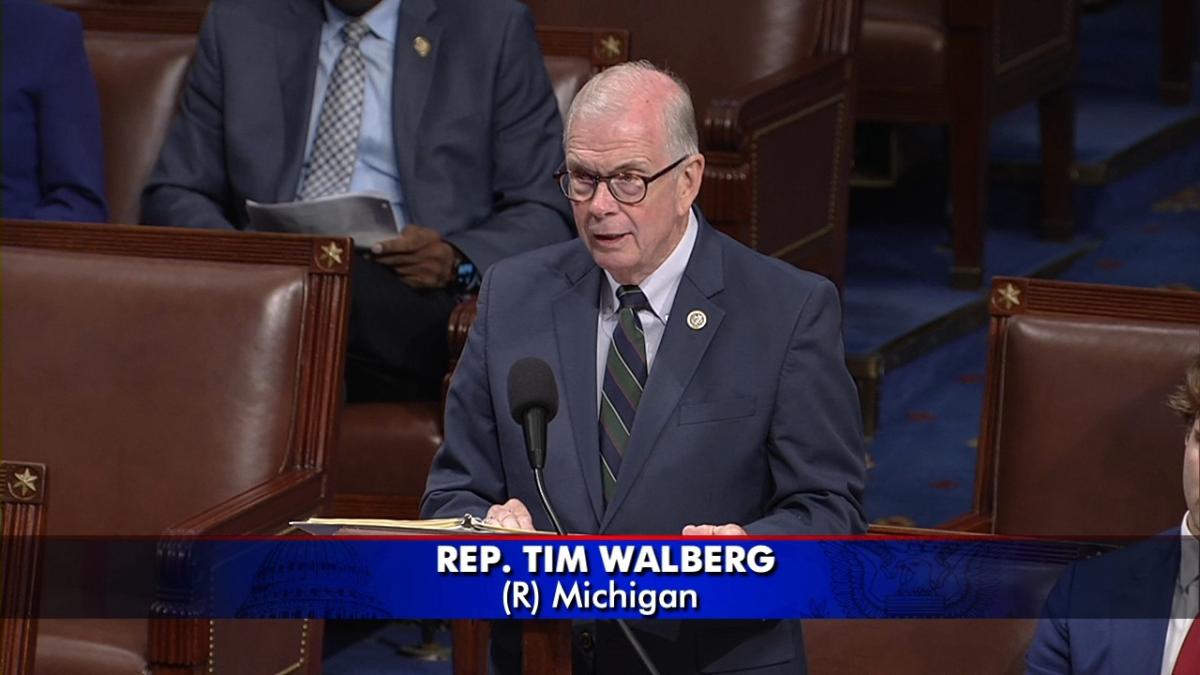
The House Education and Workforce Committee advanced legislation that would establish federal definitions of “male” and “female” under Title IX, sending the bill to the full House for consideration.
Republican lawmakers say that the legislation is intended to codify biological definitions of sex in federal law following years of changing executive branch interpretations of Title IX.
The committee approved H.R. 8781 during a markup meeting. If enacted, the legislation would amend Title IX of the Education Amendments of 1972 by establishing statutory definitions for “male” and “female,” replacing agency interpretations with statutory language.
H.R. 8781 would define “sex” as “an individual’s biologically determined sex, as either male or female.” The legislation defines “female” as “an individual who naturally has, had, will have, or would have, but for a congenital anomaly, historical accident, or intentional or unintentional disruption, the reproductive system that at some point produces, transports, and utilizes the large gamete (ova) for fertilization.”
The bill provides the same framework for the definition of “male,” substituting the corresponding male reproductive system and the small gamete.
The legislation aligns with the Trump administration’s broader effort to restore biological definitions of sex throughout the federal government following the Biden administration’s interpretation of Title IX to include “gender identity.”
The debate intensified in 2024 when the Biden administration finalized a Title IX rule in 2024 interpreting the law’s prohibition on sex discrimination to include the concept of gender identity. Portions of that rule were blocked by federal courts before the Trump administration rescinded it, resulting in years of shifting federal guidance, litigation, and uncertainty for schools and universities.
The Justice Department has also issued guidance directing recipients of federal funding to interpret federal civil rights laws according to biological sex in certain contexts. In guidance issued in 2025, the department stated that federally funded institutions should maintain sex-separated intimate spaces and women’s athletic competitions based on sex, arguing that policies allowing biological males to access female-only spaces or compete in women’s sports may violate federal law.
Following Tuesday’s committee markup, House Education and Workforce Committee Chairman Tim Walberg described the committee’s actions as part of an effort to advance what he called “commonsense policies”. The markup included consideration of 10 bills, including H.R. 8781.
”Today’s markup reflects our commitment to advancing commonsense policies that put students, parents, workers, and job creators first,” Walberg said. “These bills prepare students for the future, modernize our workforce system, support employers and small businesses, protect parental rights, and ensure our laws promote opportunity, accountability, and economic growth. I thank my colleagues for their work in advancing these important measures.”
Walberg and other Republican lawmakers supporting H.R. 8781 argue that defining sex in federal law would provide consistency in how Title IX is interpreted and applied, as well as solidify the protection of female-only spaces in public schools. Democrats on the committee opposed the legislation.
The legislation would establish statutory definitions that would apply to all schools, colleges, and universities receiving federal funding under Title IX. Potentially affected areas include athletic eligibility, sex-separated facilities, student housing, and other institutional policies that distinguish between males and females.
In recent years, disputes involving these policies have centered on males’ participation in women’s sports, access to sex-separated restrooms and locker rooms, housing assignments, overnight accommodations during school-sponsored travel, and other campus spaces where schools maintain separate accommodations for male and female students.
Because Title IX applies to nearly every college and university that receives federal funding, any statutory changes to its definitions would have nationwide implications for institutional policies and compliance requirements.
The legislation now awaits consideration by the full House of Representatives. If approved by the House, the bill would move to the Senate before being sent to the president for consideration.
Campus Reform contacted House Education and the Workforce Committee Ranking Member Robert C. “Bobby” Scott for comment on the legislation and asked why he opposed the bill supporting Title IX interpretation consistency but did not receive a response before publication.