Michigan Farm News: 'Couldn't be more thrilled' — Trump signs bill returning whole milk to schools
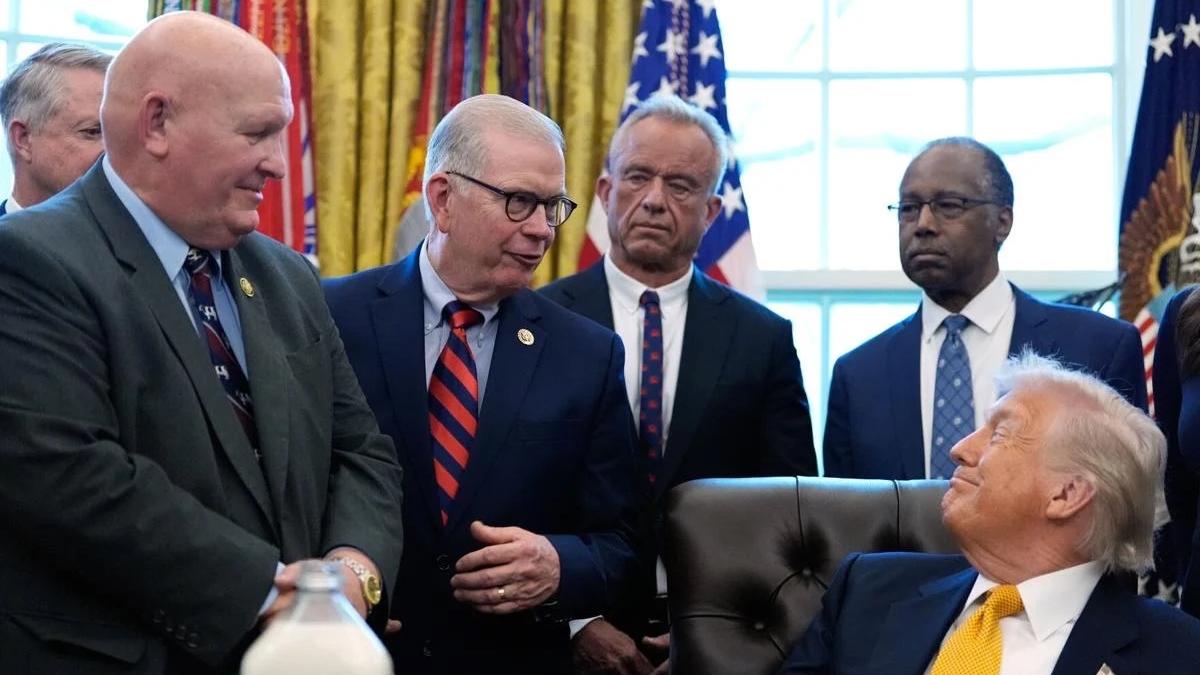
President Donald J. Trump’s first bill signing of 2026 was a big one for America’s dairy farmers and students who have spent more than a decade without whole milk being offered in their schools.
Ag Secretary Brooke Rollins, U.S. Health and Human Services Secretary Robert F. Kennedy Jr., lawmakers, and a group of dairy farmers joined the president in the Oval Office as he signed the Whole Milk for Healthy Kids Act on Wednesday.
Thanks to the new law, which saw overwhelming support from Congress, schools now have the flexibility to offer flavored and unflavored whole and 2% milk options — helping ensure children receive the nutrition they need to grow, thrive, and succeed in the classroom.
Obama-era USDA rules restricted milk served in schools to fat-free or 1% varieties beginning in the 2012-13 school year, meaning whole and 2% milk were banned, and flavored milk had to be fat-free. While later updates permitted 1% flavored milk, whole and 2% options hadn’t been allowed until now.
“Good nutrition is the foundation of a child’s life, including his or her ability to learn and grow,” said Rep. Tim Walberg (R-MI), chairman of the House Education and Workforce Committee.
“Unfortunately, misguided policies removed whole milk from schools, stripping children of options to get important and essential nutrients — driving students to caffeinated and sugary alternatives that often do more harm than good.”
USDA has issued program implementation guidance to school nutrition officials to implement the bill, and the department said a proposed rulemaking will soon commence to ensure schools and nutrition programs can begin offering whole milk as quickly as possible.
“Dairy farmers and their cooperatives couldn’t be more thrilled that whole and 2% milk is returning to school meals,” National Milk Producers Federation President and CEO Gregg Doud.
“We are ready to help schools and USDA in any way we can as this important legislation is implemented, and we thank the Trump administration, our advocates on Capitol Hill, and everyone who has worked to make school meals better through increased access to dairy.”
Rollins said the legislation advances the Trump administration’s agenda and aligns with newly-released dietary guidelines which reintroduced full-fat dairy as part of a healthy dietary pattern.
“Thanks to President Trump’s leadership, whole milk is back — and it’s the right move for kids, for parents, and for America’s dairy farmers,” Rollins added.
“This bipartisan solution to school meals alongside the newly released Dietary Guidelines for Americans reinforces what families already know: nutrient dense foods like whole milk are an important part of a healthy diet.”
A shift in dairy demand?
American Farm Bureau Federation President Zippy Duvall called returning whole milk to schools “a win-win for children and dairy farmers,” noting that the bill ensure children will have access to important vitamins, protein and other nutrients — while supporting dairy farmers who need access to expanded markets for their product.
“America’s farmers as a whole are struggling with high expenses that outpace income,” Duvall said.
“Finding a solution that benefits everyone without creating extra costs for taxpayers is innovative and a sign of good government. Farm Bureau is committed to working with the administration to find more solutions to keep farmers in business and increase affordability for America’s families.”
As Michigan Farm Newshas reported, schools account for roughly 7.5% of U.S. fluid milk sales. According to analysis from AFBF Economist Daniel Munch, if 25% of schools adopt whole milk — which he said represents an early, conservative estimate — total milkfat utilization would rise by roughly 18 million pounds annually.
If half of all schools make the switch, the increase would grow to about 36 million pounds, and if three-quarters of schools adopt whole milk, the added fat demand reaches 55 million pounds per year, according to Munch.
“Assuming current milk offerings are evenly split between skim and 1%, the same adoption levels would boost butterfat demand by 15 million, 31 million and 46 million pounds, respectively,” said Munch, adding that even under the more conservative all-1% baseline, increased milkfat demand would total 13 million, 25 million and 38 million pounds across the three adoption tiers, respectively.
“Even small shifts in school milk sales can strengthen the Class I category, lift butterfat utilization and return more value to farmers,” Munch said.
Click here to read the full Market Intel report.